
 EN
 ar
 bg
 hr
 cs
 da
 nl
 fi
 fr
 de
 el
 hi
 it
 ko
 no
 pl
 pt
 ro
 ru
 es
 sv
 tl
 iw
 id
 lv
 lt
 sr
 sk
 sl
 uk
 vi
 et
 hu
 th
 tr
 fa
 ms
 hy
 ka
 ur
 bn
 mn
 ta
 kk
 uz
 ku

Twisted Pair Shielded Test Cable
Kingmach Twisted Pair Shielded Test Cable fit naturally with the company's structural health monitoring product range, including strain gauges, load cells, displacement transducers, settlement sensors, tiltmeters, environmental instruments, accelerometers, water-level equipment, and readouts or data loggers. The cable family supports the installation, maintenance, and upgrading of those measurement systems. When a site uses mixed instruments, a consistent cable approach reduces confusion at junction boxes and acquisition cabinets. That consistency becomes important during maintenance, when technicians need to trace a fault quickly without disturbing stable channels.
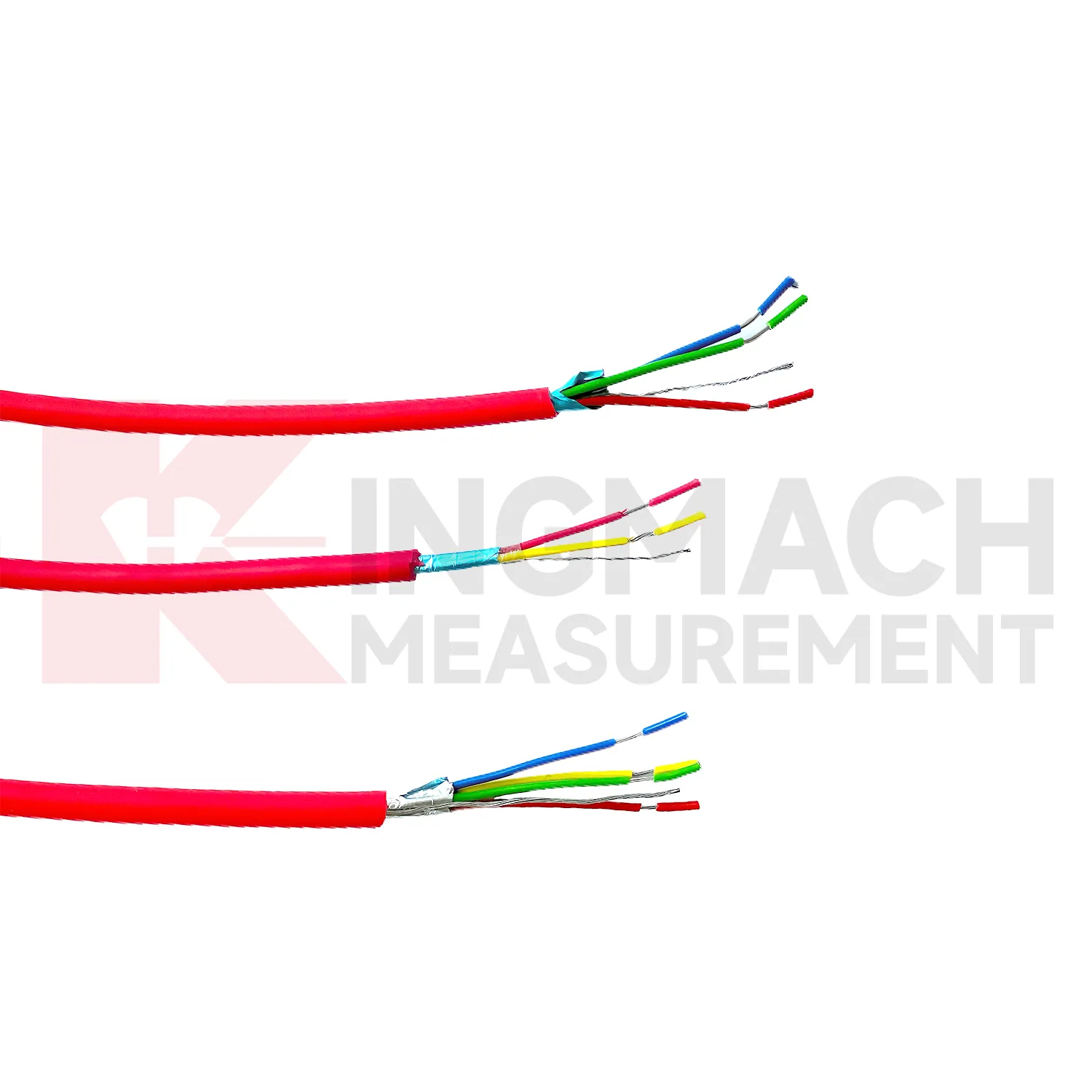
Application of Twisted Pair Shielded Test Cable
Environmental monitoring stations use Kingmach Twisted Pair Shielded Test Cable to connect rainfall, temperature, humidity, wind, water-level, and soil instruments with acquisition hardware. These stations often sit outdoors with daily temperature swings, rain, dust, and maintenance visits. Cable selection affects whether the station keeps transmitting usable data through seasonal conditions. Waterproof and moisture-proof cable behavior helps reduce field failures, while clear core assignment prevents mistakes during sensor replacement. This is especially useful when environmental readings are used to explain changes in structural or geotechnical sensors.
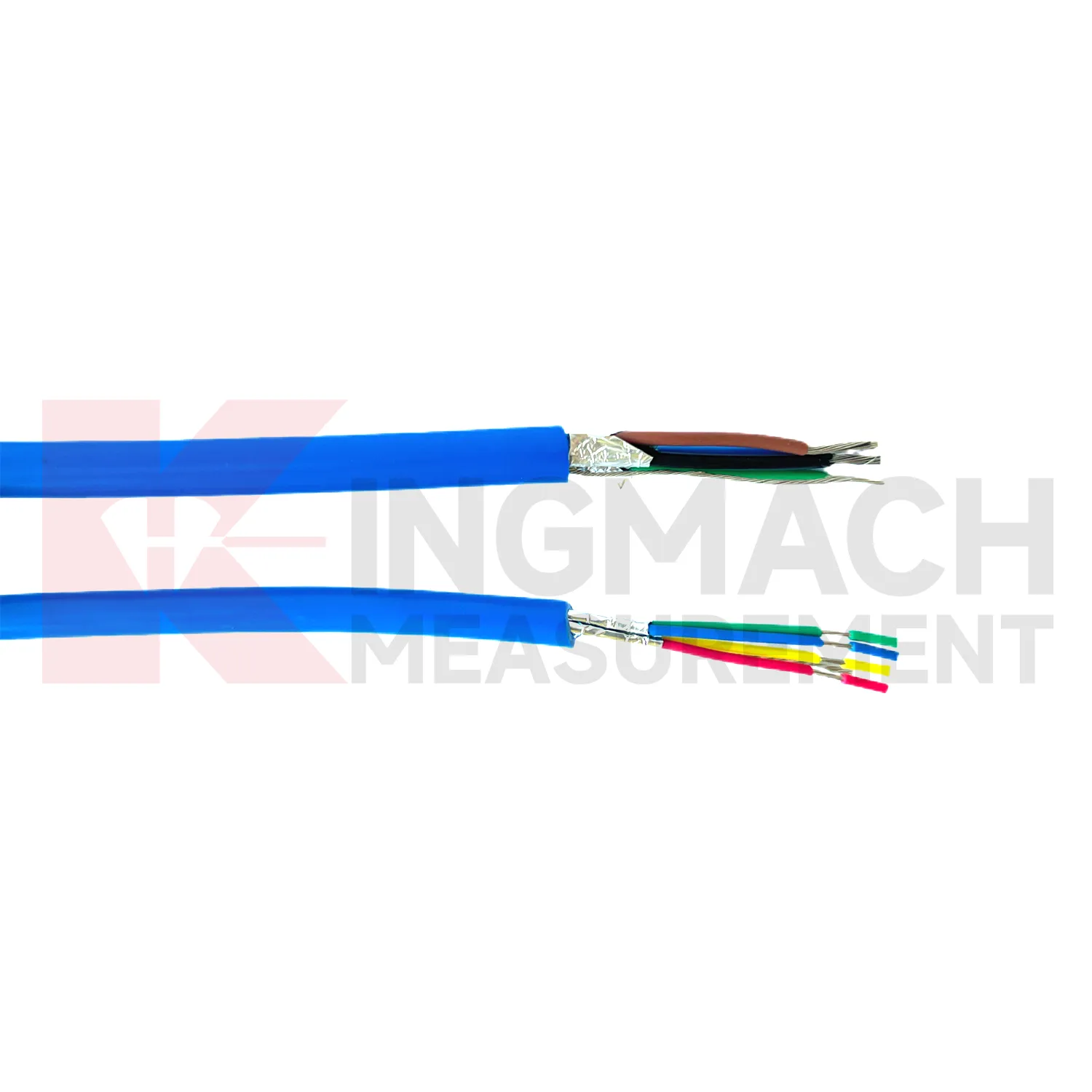
The future of Twisted Pair Shielded Test Cable
Digital twin projects will use Kingmach Twisted Pair Shielded Test Cable as part of the physical link between a real structure and its virtual record. A twin needs sensor data that can be traced back to known points, known channels, and known installation routes. Cable documentation will therefore become part of the model history, not merely a maintenance note. When a bridge, dam, tunnel, or building record changes, reviewers can check both structural behavior and cable condition before updating risk status or maintenance plans.
Care & Maintenance of Twisted Pair Shielded Test Cable
Inspect Kingmach Twisted Pair Shielded Test Cable after construction activity near the route. Excavation, welding, drilling, formwork movement, equipment relocation, and temporary power installation can all damage cable or change interference conditions. The inspection should cover sheath cuts, crushed sections, loose ties, connector strain, cabinet entry sealing, and changed proximity to power lines. If data changed around the same date as site work, check the cable path before treating the change as a structural trend.
Kingmach Twisted Pair Shielded Test Cable
A reliable monitoring chain needs Kingmach Twisted Pair Shielded Test Cable because sensor signals often travel through harsh physical zones before reaching a recorder. The cable may cross a bridge deck, run along a tunnel wall, pass through a wet gallery, sit near a pump room, or bend into a sealed cabinet. Each section adds risk: abrasion, pulling force, water entry, electromagnetic noise, or accidental damage during maintenance work. JMZX-XPX focuses on low-loss shielded transmission for precise testing. JMZX-XSX focuses on hydraulic environments where pressure resistance, tensile strength, and water resistance carry more weight. Matching those roles keeps field data closer to the real sensor output.
FAQ
Q: What should be checked before pulling cable?
A: Confirm the drawing route, conduit condition, bend radius, wet sections, nearby power equipment, and cabinet entry position.
Q: How should a shielded cable route be handled?
A: Keep it away from strong electrical sources where possible and maintain the intended shielding practice at termination.
Q: Why are cable ends important?
A: Open or poorly sealed ends can let moisture enter the route and create unstable readings long after installation.
Q: What commissioning signs suggest a cable issue?
A: Repeated spikes, channel dropouts, flatline data, or readings that change when nearby equipment starts can point to the route.
Q: Why keep installation photos?
A: Photos show route position, cabinet entry, labels, and later changes, which makes troubleshooting faster.
Reviews
James Thompson
The tiltmeters and accelerometers are very sensitive and provide precise data. Perfect for our structural health monitoring system.
Matthew Garcia
Instrumentation cables are durable and perform well even in harsh environments. Will definitely order again.
Latest Inquiries
To protect the privacy of our buyers, only public service email domains like Gmail, Yahoo, and MSN will be displayed. Additionally, only a limited portion of the inquiry content will be shown.
Harper***@gmail.comIndia
Dear Sir, we are planning to procure a complete monitoring system including strain gauges, tiltmeter...
Charlotte***@gmail.comUnited Arab Emirates
Hi, we require instrumentation cables suitable for harsh environments. Could you advise on specifica...
Related product categories
- Hydraulic cable
- Instrumentation Cables
- Sensor Cables
- Twisted Pair Shielded Test Cable
- Doublelayer Shielded Test Cable
- Triplelayer Shielded Test Cable
- Singlelayer Shielded Test Cable
- Multicore Shielded Test Cable
- 2core / 4core / 6core / 8core Hydrological Cable
- Corrosionresistant Hydrological Cable
- Shielded Hydrological Cable
- Multicore Hydrological Cable